
Categories
Tags
30days AI ai arch automation backend blog blogging booking burnout career chatbot cms codebar codeyourfuture coding cybersecurity design development devops django docker email express fastapi flight Flight Booking System full stack full-stack fundraising gmail google-fit GPT-3 hyprland interviews javascript journey jupyter LinkedIn linux manus MERN mongodb NextJS nextjs notion omarchy OpenAI openai pandas planning portfolio programming project python react ReactJS search sendgrid smtp software software development tailwind
236 words
1 minutes
Day 20 of 30 Days of FastAPI - Static Files & Templates — Creating a UI for your API

Welcome back! After a short Sunday’s break, we are adding a visual layer to our API. Sometimes, you need a simple dashboard or a landing page to show off your work.
1. Folder Structure
To keep things clean, we adopt a standard directory structure.
.
├── static/          # CSS, JS, Images
├── templates/       # HTML files (Jinja2)
├── main.py
└── ...
2. Serving Static Files
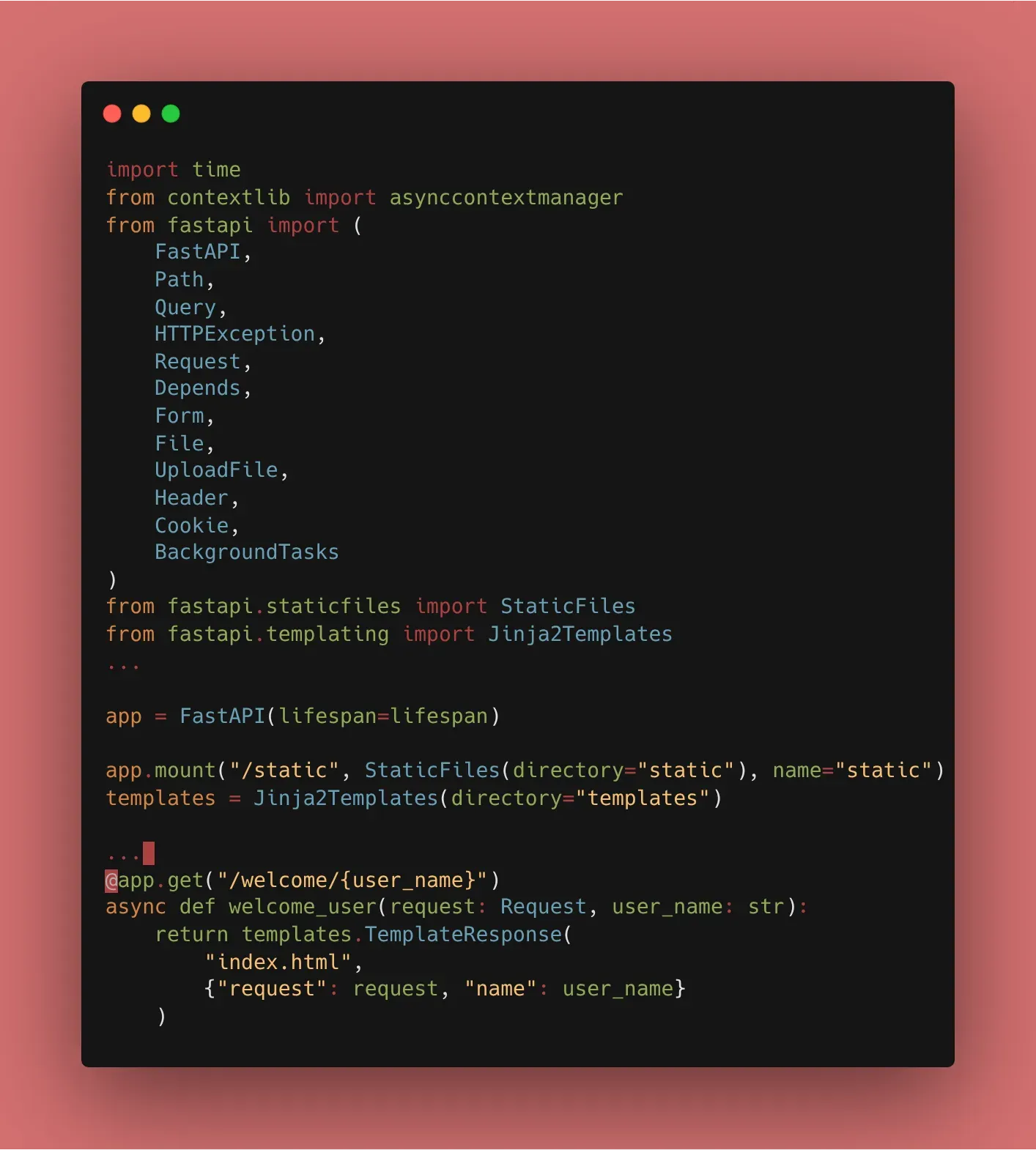
FastAPI uses StaticFiles from Starlette to “mount” a directory. This makes files like style.css accessible at /static/style.css.
from fastapi.staticfiles import StaticFiles

app = FastAPI()

app.mount("/static", StaticFiles(directory="static"), name="static")
3. Rendering HTML with Jinja2
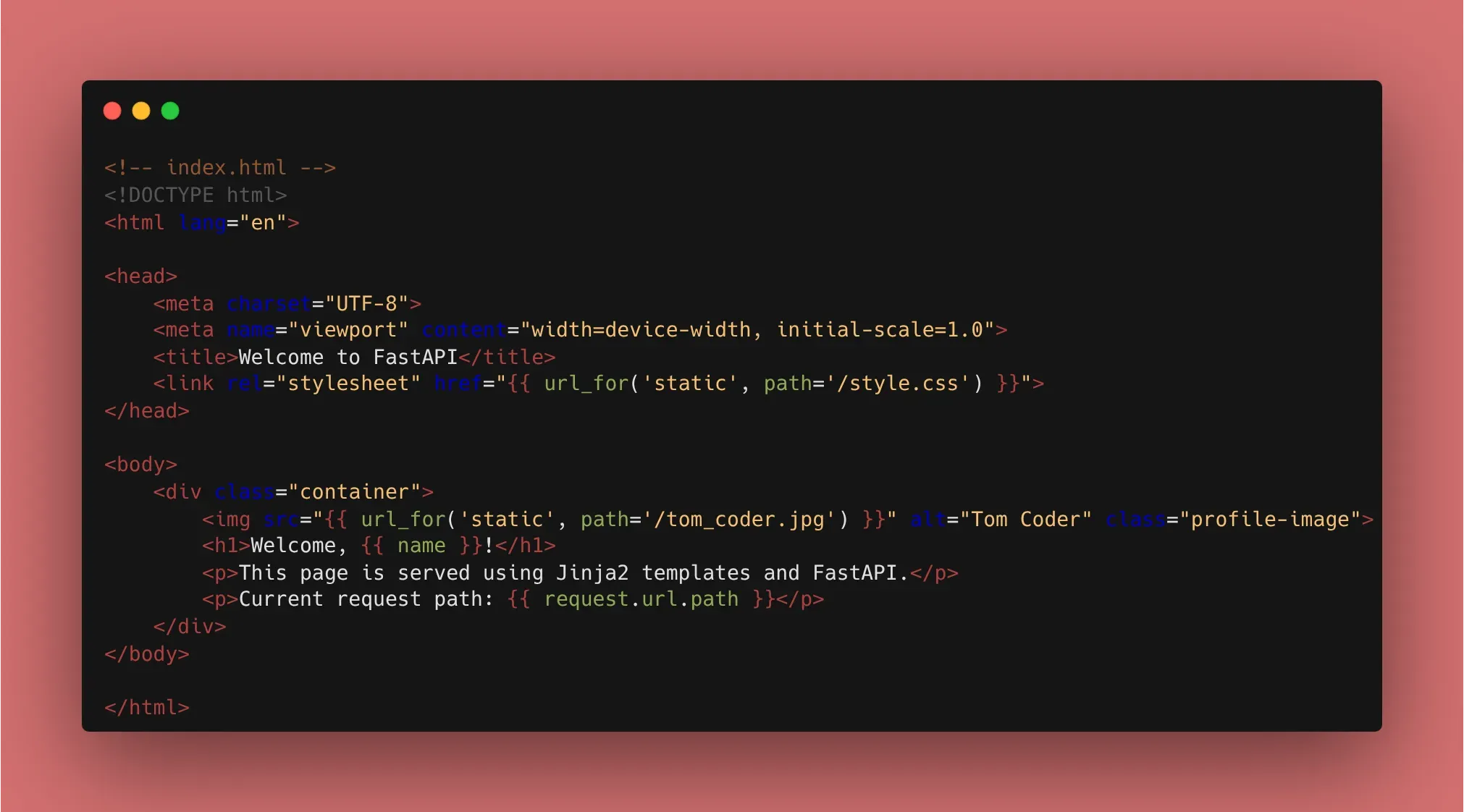
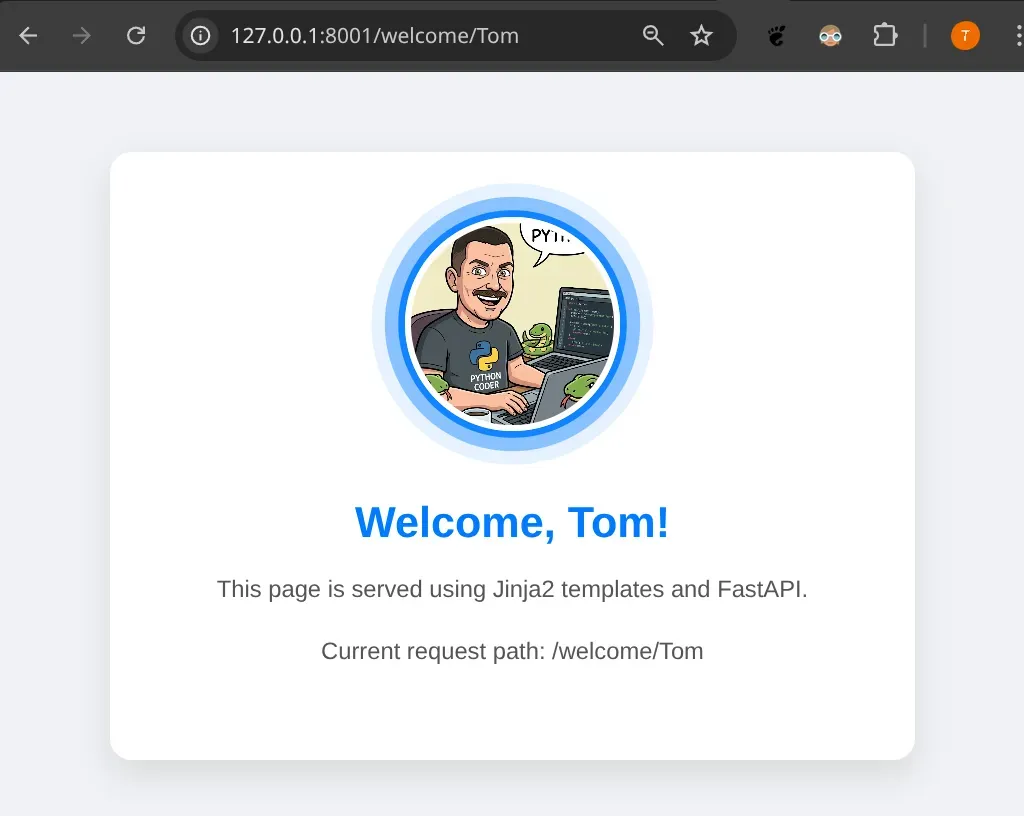
Instead of returning a dict, we now return a TemplateResponse. This allows us to pass variables from our Python code into our HTML.
from fastapi.templating import Jinja2Templates
from fastapi import Request

templates = Jinja2Templates(directory="templates")

@app.get("/welcome/{user_name}")
async def welcome_user(request: Request, user_name: str):
    return templates.TemplateResponse(
        "index.html",
        {"request": request, "name": user_name}
    )
4. Why the request object?
You might notice we pass the request in the context. Jinja2 requires this to generate URLs and handle internal logic correctly.
🛠️ Implementation Checklist
- Installed
jinja2using uv add jinja2. - Created
static/andtemplates/folders. - Mounted the static directory in
main.py. - Created a base HTML template and rendered it via a GET route.
- Verified that my custom Starlette error handler still works (it will still return JSON, which is perfect for API debugging even if the UI fails!).
📚 Resources
- Official Docs: FastAPI Static Files
- Official Docs: FastAPI Templates
- Book: FastAPI: Modern Python Web Development (Chapter 9: Templates and Static Files).
Day 20 of 30 Days of FastAPI - Static Files & Templates — Creating a UI for your API
https://beyond400.vercel.app/posts/fastapi-20/