

Ok, now we are getting into the deep end. We are building the logic that makes our authentication “real.” We have two goals: protect stored passwords and issue secure session tokens.
1. Secure Password Hashing
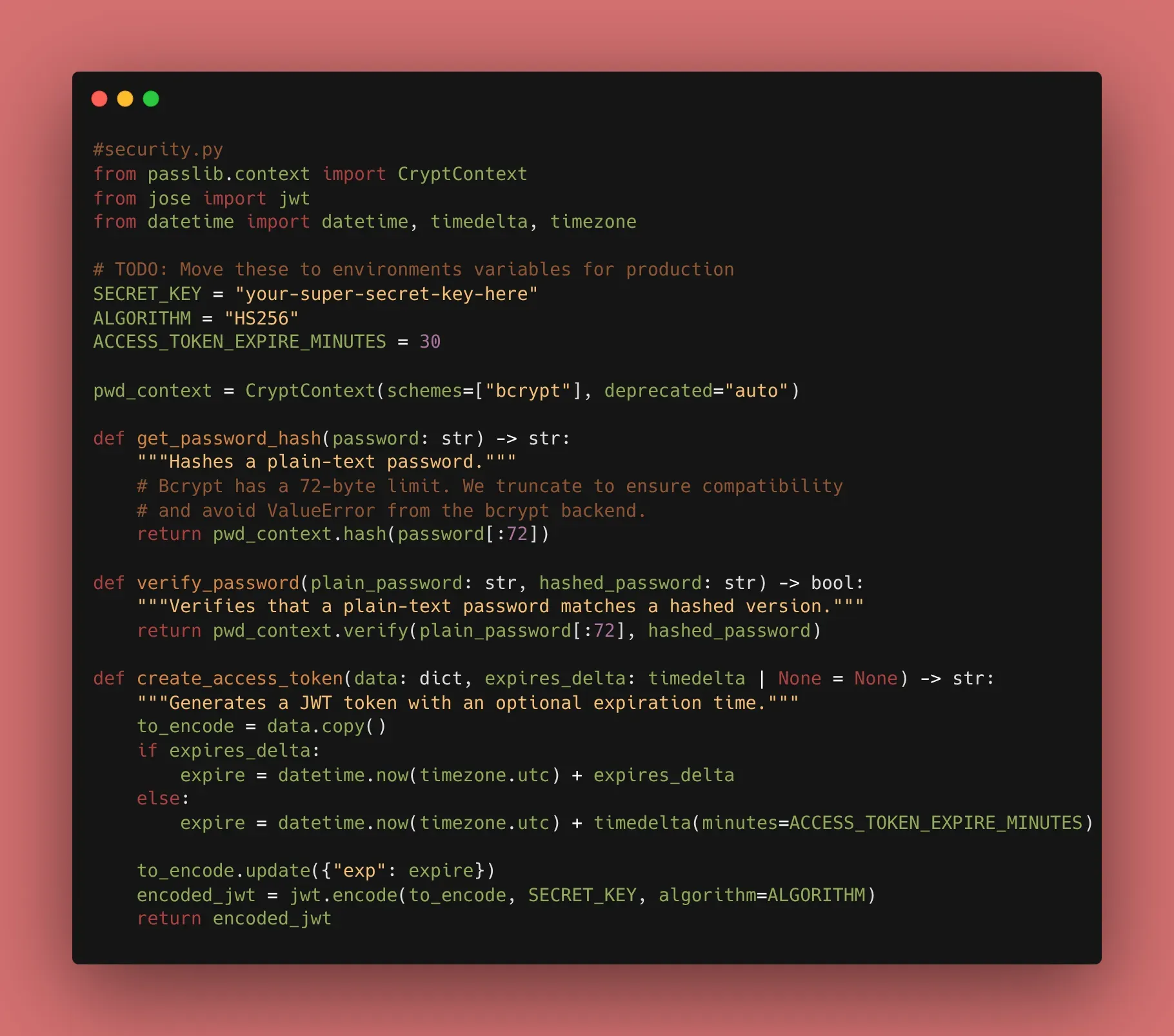
Storing a password as “password123” in a database is a disaster waiting to happen. We use passlib to “hash” it—a one-way transformation that is impossible to reverse.
from passlib.context import CryptContext

pwd_context = CryptContext(schemes=["bcrypt"], deprecated="auto")

def get_password_hash(password):
    # Note: Bcrypt has a 72-byte limit. In our implementation,
    # we ensured compatibility by handling library backends correctly.
    return pwd_context.hash(password)

def verify_password(plain_password, hashed_password):
    return pwd_context.verify(plain_password, hashed_password)
2. Generating JWT Tokens
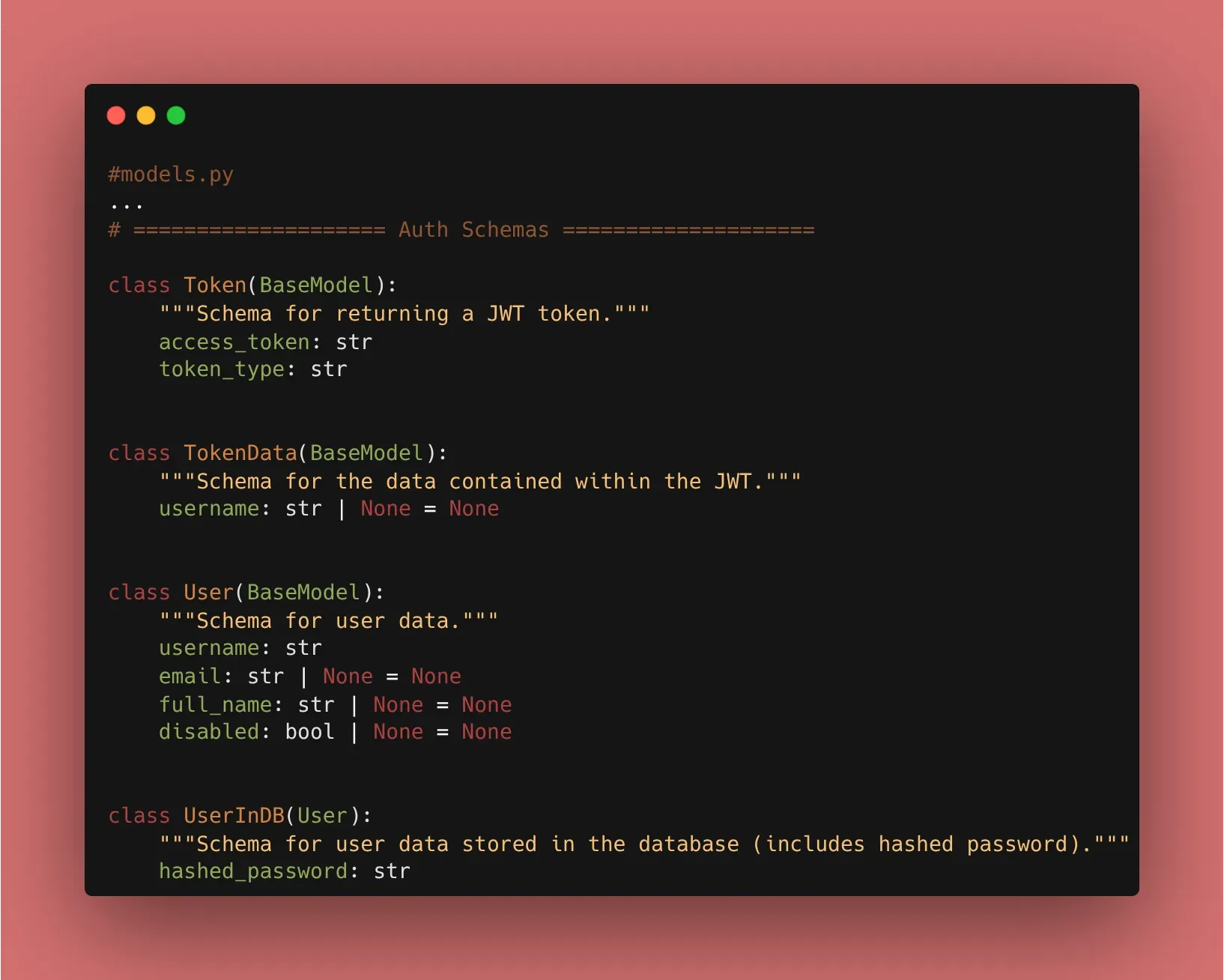
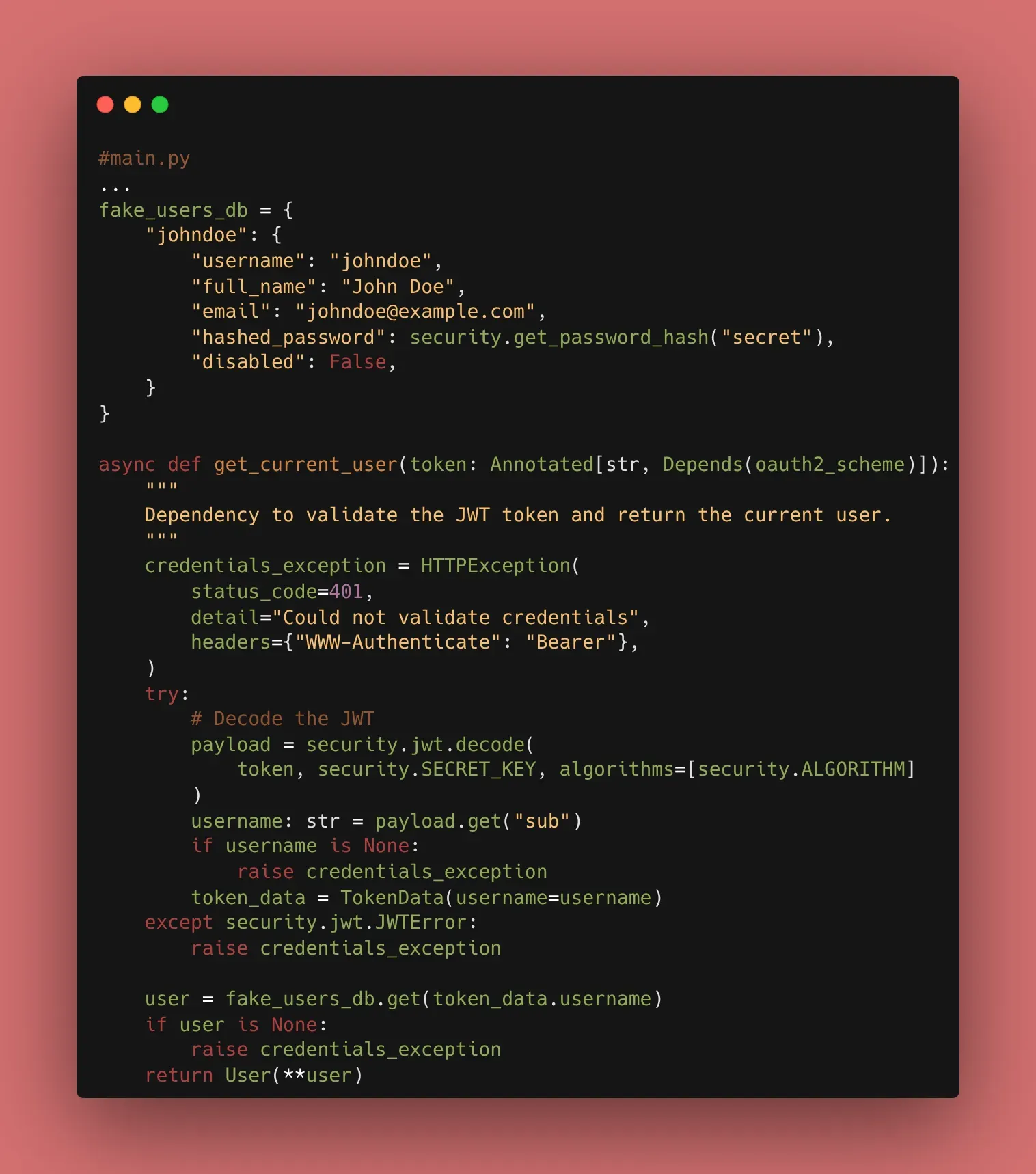
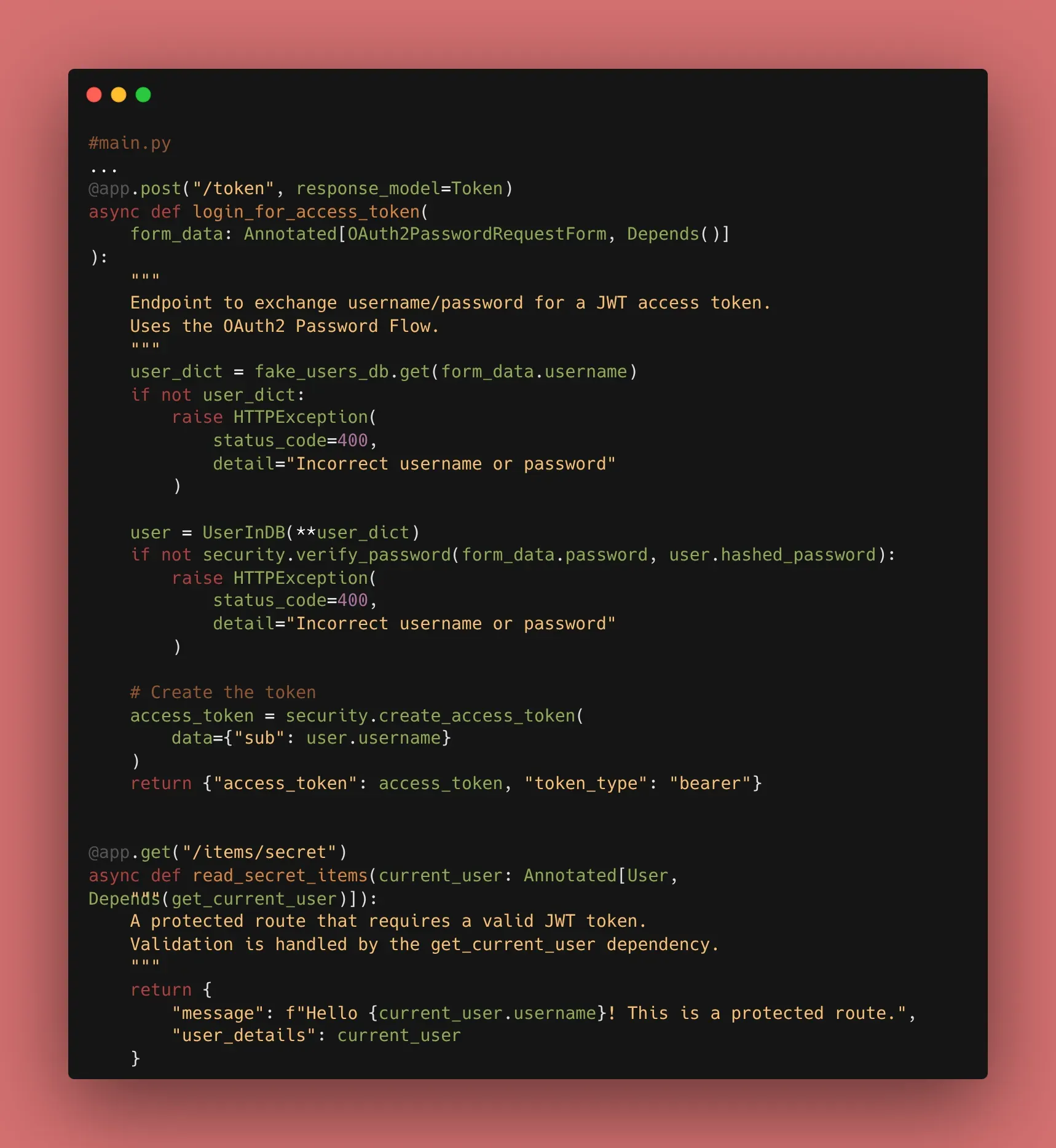
A JWT is a signed string that contains “claims” (like user ID and expiry). Because it’s signed with a SECRET_KEY, the client cannot change the data without breaking the signature.
from jose import jwt
from datetime import datetime, timedelta, timezone

SECRET_KEY = "your-super-secret-key-here"  # TODO: Move to .env
ALGORITHM = "HS256"

def create_access_token(data: dict, expires_delta: timedelta | None = None):
    to_encode = data.copy()
    # modern way: use timezone-aware datetimes
    expire = datetime.now(timezone.utc) + (expires_delta or timedelta(minutes=15))
    to_encode.update({"exp": expire})
    return jwt.encode(to_encode, SECRET_KEY, algorithm=ALGORITHM)
3. Why JWT?
Unlike session cookies, JWTs are stateless. The server doesn’t need to remember every logged-in user in its memory; it just validates the token’s signature. This makes your API incredibly easy to scale.
⚠️ Troubleshooting: The “72-Byte Limit” Bug
While implementing this, you might run into a ValueError: password cannot be longer than 72 bytes during testing. This often happens because of a conflict between the bcrypt library and passlib’s internal wrap-detection.
The Fix: Uninstall the standalone bcrypt library and let passlib use its built-in implementation, or ensure you aren’t passing massive strings to the hashing function. In our case, running uv remove passlib && uv add passlib (without the [bcrypt] extra) solved the issue while maintaining secure hashing.
🛠️ Implementation Checklist
- Installed
passlibandpython-jose[cryptography]using uv. - Created
security.pyfor hashing and verifying passwords. - Implemented the
create_access_tokenfunction withtimezone.utc. - Updated the
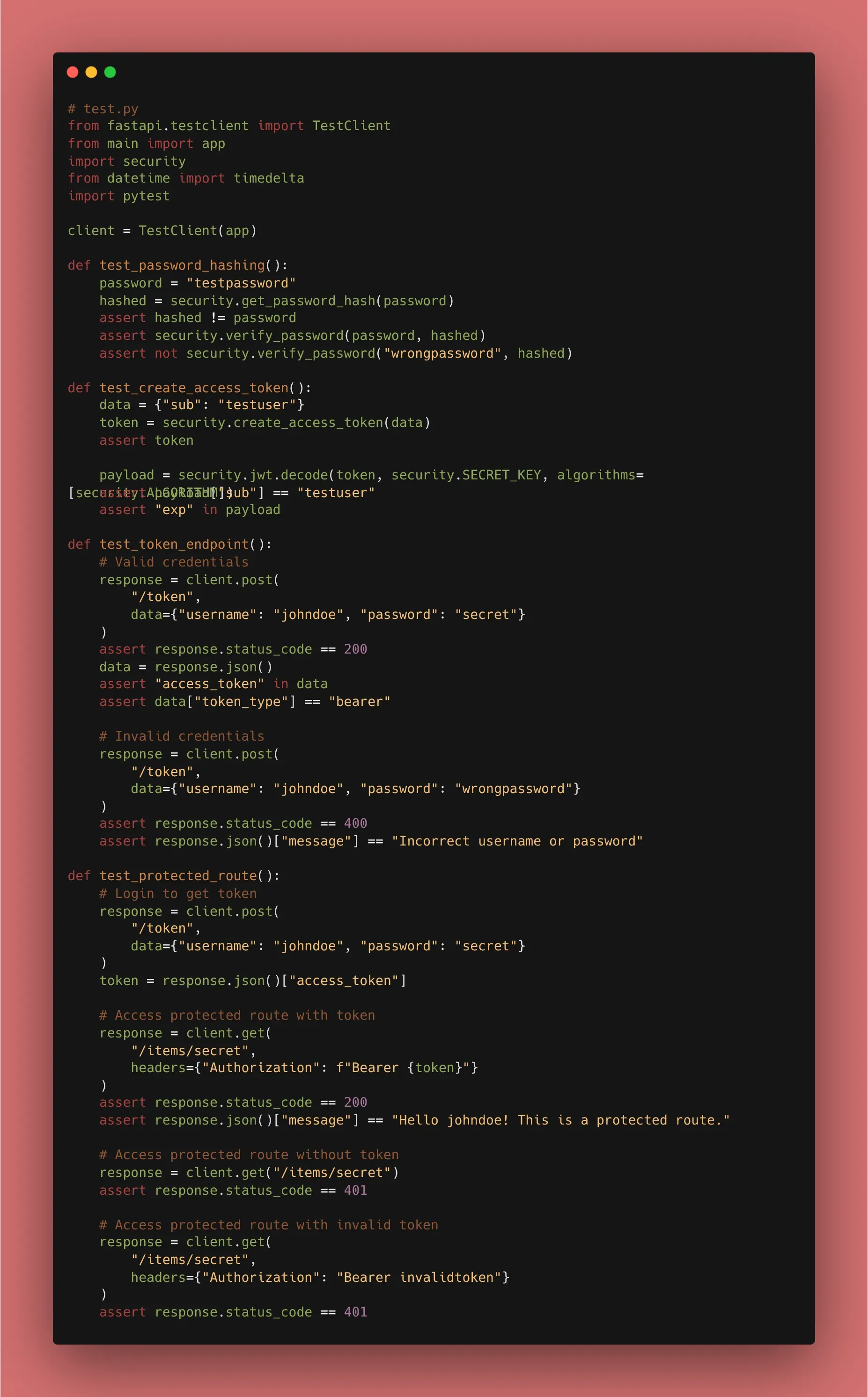
/tokenendpoint to return a real JWT. - Successfully bypassed the bcrypt backend 72-byte limit bug.
📚 Resources
- Official Docs: FastAPI OAuth2 with Password and Bearer
- Book: FastAPI: Modern Python Web Development (Chapter 7: JWT and Password Hashing).